


Why are semiconductors used in electronic devices?
Semiconductors are at the heart of all modern electronic devices because they have a unique property – they can act as both a conductor (like metals) and an insulator (like rubber), depending on how we control them. This “switching” ability makes them ideal for building circuits.
Reasons Why Semiconductors Are Used in Electronics
- Switching & Control of Current
- Semiconductors (like silicon) can switch electricity on and off very quickly.
- This is essential for making transistors, which are the building blocks of processors, memory chips and logic circuits.
- Miniaturization
- Billions of transistors can fit into a tiny chip, allowing devices like smartphones, laptops and wearables to be powerful yet compact.
- Energy Efficiency
- They consume less power compared to simple metal conductors, making devices more efficient and portable.
- Versatility
- By doping (adding impurities), we can change the electrical properties of semiconductors, creating diodes, transistors, LEDs, solar cells and more.
- Signal Processing
- They can amplify signals (like in radios and speakers) and also work as rectifiers (converting AC to DC), making them useful in communication and power electronics.
- Reliability
- Semiconductor chips are long lasting, durable and stable, which is why they are trusted in everything from smartphones to satellites.
Examples in Everyday Devices
- Mobile Phones & Laptops → Processors (CPU, GPU), memory chips (RAM, flash storage).
- LED Bulbs → Light emitting diodes are made from semiconductors.
- Solar Panels → Use silicon wafers to convert sunlight into electricity.
- Automobiles → Chips control sensors, engine management and EV batteries.
Why are semiconductor stocks a good investment?
Semiconductor stocks are often considered a good long term investment because semiconductors are the “backbone of modern technology”. Every electronic device you use – smartphone, laptop, car, data center, AI system – needs chips.
Reasons Why Semiconductor Stocks are a Good Investment
1. Ubiquitous Demand
- Chips power almost everything: smartphones, PCs, TVs, cars, medical devices, 5G networks, AI servers and even household appliances.
- As technology adoption grows, chip demand grows too.
2. High Entry Barriers
- Building a semiconductor fab (manufacturing plant) costs billions of dollars and takes years.
- This creates limited competition – companies like TSMC, Intel, Samsung, Micron dominate globally.
3. Secular Growth Drivers
- AI & Machine Learning → Huge demand for GPUs (Nvidia, AMD).
- 5G & IoT → Billions of connected devices need chips.
- Electric Vehicles (EVs) → EVs use 2-3x more chips than regular cars.
- Cloud & Data Centers → Demand for high performance processors and memory.
4. Geopolitical Importance
- Countries (USA, India, EU) are heavily investing in local semiconductor industries for strategic independence.
- Announced New Tariffs on Semiconductor Imports. US President Donald Trump revealed plans to impose new tariffs on semiconductor chips and steel, structured to start low and increase over time. This phased tariff strategy is intended to encourage companies to establish manufacturing operations within the U.S.
- SEMICON India 2024. Indian Prime Minister Narendra Modi inaugurated SEMICON India 2024 at Greater Noida, highlighting India’s vision to become a global hub for semiconductors.
- India’s Semiconductor Ambition
- India is the 8th country to host a global semiconductor event. India aims to create a workforce of 85,000 semiconductor professionals and is backing research with a ₹1 trillion fund.In his 79th Independence Day speech on 15 Aug 2025, Prime Minister Narendra Modi announced that semiconductor chips manufactured in India will hit the market by the end of 2025.
5. Strong Profitability
- Many semiconductor companies enjoy high margins because of advanced tech and limited competition.
- Leaders like Nvidia, TSMC, ASML have delivered multi fold returns to investors.
6. Diversification within the Sector
- Different types of companies:
- Foundries (TSMC, Samsung) → manufacture chips.
- Fabless designers (Nvidia, AMD, Qualcomm) → design chips but outsource production.
- IDMs (Intel, Micron) → design + manufacture.
- Equipment suppliers (ASML, Applied Materials) → supply machines used in chipmaking.
Example of Returns
- Nvidia (NVDA): Stock rose >500% (2020-2025) due to AI boom.
- TSMC (TSM): Benefited from Apple, AMD, Nvidia chip production.
- ASML (ASML): Monopoly in EUV lithography machines, stock surged in last decade.
Is Micron Technology a good investment?
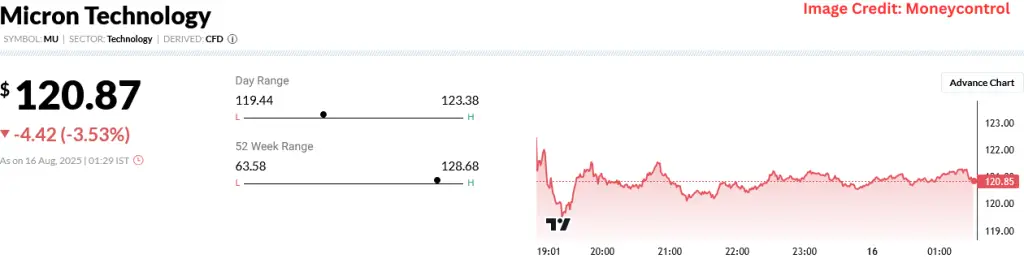
Micron Technology, Inc. (headquartered in the U.S.) is a publicly traded company listed on the NASDAQ under the ticker MU.
Indian subsidiaries, such as Micron Semiconductor Technology India Private Limited are private entities and not listed on any stock exchange. According to corporate records, this Indian private limited company was incorporated on 11 November 2022 and remains unlisted.
Micron Technology (India) is establishing an Outsourced Semiconductor Assembly and Test (OSAT) facility in Sanand, Gujarat, expected to begin operations in early 2025. This facility focuses on DRAM and NAND memory assembly and testing, supported by a massive investment including government subsidy.
What’s Driving the Positive Outlook
- AI Driven Demand & Record Q3 Performance
Micron posted Q3 FY2025 revenue of $9.3 billion, fueled by DRAM and HBM demand, especially from AI focused data centers. HBM revenue rose nearly 50% sequentially, pushing gross margins to 39% and delivering $4.6 billion in operating cash flow. - Upgraded Q4 Guidance
The company raised its Q4 revenue forecast to $11.2 billion from $10.7 billion and lifted its gross margin projection to 44.5%. Analysts attribute this to improved pricing and AI tailwind demand. - Expansion into AI Infrastructure & Space Markets
Micron continues to innovate with new data center SSDs (G9 NAND, PCIe 6.0) and space qualified memory offerings. Q3 earnings surged 208% YoY, and full year earnings could grow by 515%, propelled by institutional interest. - Sector Momentum & Technical Strength
Micron remains technically strong, hovering near a “buy point” following its recent rally. - Long Term Growth with Attractive Valuation
Analysts see Micron as undervalued, trading at 10-12x forward earnings – well below peers. Growth projections include 44% revenue growth in FY2025 and EPS growth of over 500%, supported by strong AI demand.

- Strong Foundations & Market Position
Micron benefits from substantial free cash flow, strong liquidity and a strategic push into AI focused memory segments like HBM.
Final Verdict
Micron Technology stands out as a compelling investment for long term investors focused on AI driven growth and memory infrastructure:
- Strong fundamentals and earnings momentum driven by AI demand.
- Attractive valuation compared to peers.
Strategic positioning in HBM, data center memory and space applications.
How you can invest in Micron Technology stock from India?
You can invest in Micron Technology (NASDAQ: MU) stock from India, but since it’s a U.S. listed stock, you’ll need to use international investment routes. Here’s a clear breakdown:
Ways to Invest in Micron (MU) from India
1. Through Indian Brokers with Global Tie-ups
Many Indian stock brokers have partnerships with U.S. brokers. You can open a global trading account and buy MU directly.
Examples: Zerodha (via Vested), ICICI Direct, HDFC Securities, Kotak Securities, Axis Securities.
2. Through Global Investment Platforms
You can directly sign up with apps that allow Indians to invest in U.S. stocks.
Examples: Vested, INDmoney, Groww (Global), Stockal, Winvesta.
3. Through U.S. ETFs
If you don’t want to buy Micron individually, you can invest in ETFs (Exchange Traded Funds) that hold Micron.
Examples:
- Invesco QQQ Trust (QQQ) – Tracks Nasdaq 100, includes Micron.
- iShares Semiconductor ETF (SOXX) – Focused on semiconductor companies.
- VanEck Semiconductor ETF (SMH) – Holds MU, TSMC, NVIDIA, AMD, etc.
These ETFs spread your risk across the semiconductor sector.
4. Through Mutual Funds in India (Indirect Route)
Some Indian mutual funds invest globally in tech and semiconductor ETFs.
Examples:
- Motilal Oswal Nasdaq 100 ETF/Fund of Fund
- Edelweiss U.S. Technology Equity Fund of Fund
- Nippon India U.S. Equity Opportunities Fund
(These indirectly give exposure to MU if it’s part of their portfolio).
RBI Rules to Remember (LRS Scheme)
- Indians can invest abroad under the Liberalized Remittance Scheme (LRS).
- Limit: USD 250,000 per financial year per person.
- This covers stocks, ETFs, property, education, travel, etc.
Conclusion
Semiconductor stocks are a good investment because chips are the “oil of the digital age” – essential, scarce and growing in demand with every new wave of technology.