

In the ever evolving landscape of global trade, tariffs between India and the United States have once again taken center stage. With both economies pushing for fairer trade terms and stronger domestic industries, recent developments in tariff policies are set to impact everything from agriculture and technology to manufacturing and consumer goods. Whether it’s India reducing tariffs on American products under diplomatic agreements or the US imposing duties to counter trade imbalances, the implications go far beyond government policy – they affect businesses, investors and everyday consumers.
Why India – US trade deal has not happened?
The India – US trade deal has been under negotiation for several years, but a comprehensive trade agreement has not yet been reached due to several key sticking points. Here are the main reasons:
1. Tariff and Market Access Disputes
- High Indian tariffs on certain US goods (like apples, almonds and Harley Davidson Motorcycles) have been a long standing issue for the US.
- India, on the other hand, has demanded greater access for its IT Services, pharmaceuticals and agricultural products in the US market.
- Both sides have struggled to find a balanced middle ground on reducing tariffs while protecting domestic industries.
2. E-Commerce and Digital Trade Barriers
- The US wants free flow of data across borders, while India supports data localization – requiring companies to store Indian user data within the country.
- India has also imposed restrictions on E-commerce platforms (like Amazon and Walmart owned Flipkart), which the US sees as discriminatory.
3. Agricultural Access and Food Safety Rules
- The US has pushed for more access to the Indian agricultural market, including dairy products, but India has concerns related to religious and food safety standards.
- India has strict requirements for animal feed and slaughter practices that clash with US norms.
4. Pharmaceuticals and Intellectual Property Rights
- India wants the US to ease price controls and regulatory hurdles for its generic drugs.
- The US has expressed concerns about India’s weak enforcement of intellectual property rights (IPR) and patent protections.
5. Generalized System of Preferences (GSP) Withdrawal
- In 2019, the US revoked India’s GSP status, which had allowed duty free exports of over 3,000 Indian products.
- India demanded its reinstatement as part of any deal, while the US wanted concessions first before reconsidering it.
6. Political and Strategic Calculations
- Both countries are strategic allies, but domestic politics and protectionist policies have made trade compromises difficult.
The focus has often shifted to bilateral defense cooperation and geopolitical alignment (especially against China), while trade talks remained secondary.
What is a Tariff?
A tariff is a tax imposed by a government on imported (or sometimes exported) goods. It is used to:
- Make imported goods more expensive.
- Protect local industries from foreign competition.
- Generate revenue for the government.
- Influence trade relationships.
What Does ‘Tariff on India’ mean?
The term ‘tariff on India’ generally refers to taxes or duties imposed on goods that are imported from India into another country. Eg: Other countries like the USA, UK or China are charging an import tax on goods that are coming from India.
What Tariff does India have on US goods?
1. Overall Average Duties
- As of 2023, India’s Most Favored Nation (MFN) average tariff stood at 17%, the highest among major economies. This includes:
- Non agricultural goods: 13.5%
- Agricultural goods: 39%
- Following duty revisions in FY 2026, the weighted average tariff decreased to approximately 10.66%, though a higher agricultural average of 39% remains.
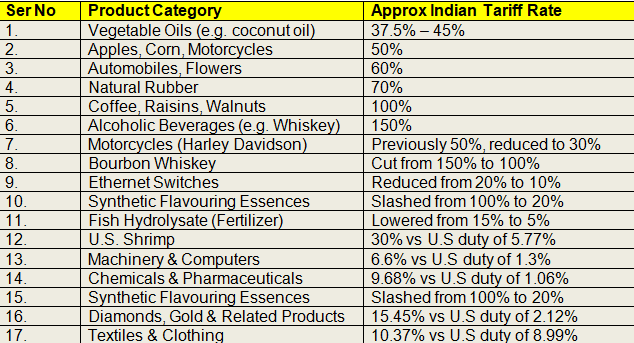
2. Tariffs on Specific U.S. Products
Here’s a snapshot of notable import duties:
What is US tariff on India?
Current U.S. Tariff Rates on Imports from India
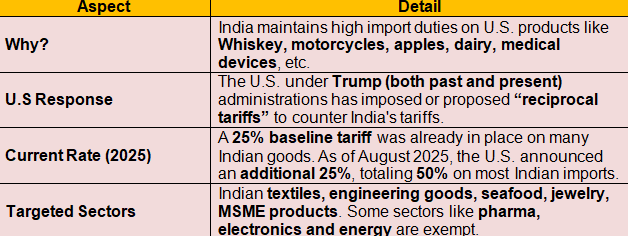
1. 25% Baseline Tariff
- As of August 7, 2025, the United States applies a 25% tariff on goods imported from India, which includes the base rate (around 10%) plus additional reciprocal tariffs aimed at addressing trade imbalances.
2. Tariff Hike to 50%
- On August 6, 2025, President Trump issued another executive order imposing an additional 25% tariff on Indian imports, citing India’s continued purchases of Russian oil. This brings the total U.S. tariff on most Indian goods to 50%, among the highest any country faces.
3. Scope and Impact
- The higher 50% rate is set to come into effect within 21 days (around August 27, 2025) after the August 7 announcement.
- These elevated duties particularly hurt sectors like textiles, engineering goods, seafood, gems & jewelry and MSMEs affecting up to 55% of Indian shipments to the U.S.
4. Exemptions
- Some sectors are currently exempted from the 50% tariff rate:
- Pharmaceuticals (finished drugs, APIs, essential drug components)
- Energy products (crude oil, refined fuels, natural gas, coal, electricity)
Electronics (computers, tablets, smart phones, SSDs, flat panel displays, semiconductors)
What Does “Reciprocal” Mean in Trade?
“Reciprocal” in this context means:
“If you charge us high tariffs, we will charge you the same amount on your goods.” It’s a retaliatory or balancing measure, especially when one country feels that another country is unfairly protecting its markets through high import duties.
U.S Reciprocal Tariffs on India: Key Points
What is the impact of tariffs on Indian Economy?
Tariffs whether imposed by India or on India by other countries have both positive and negative effects on the Indian economy. The impact depends on whether India is levying the tariff or is the target of foreign tariffs. Let’s explore both sides:
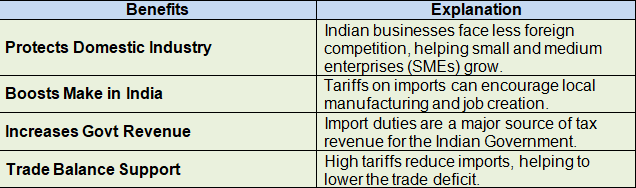
1. When India Imposes Tariffs on Imports
Positive Effects:
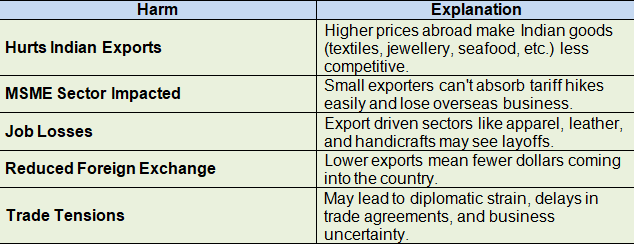
2. When Other Countries Impose Tariffs on Indian Goods (like the U.S.)
Negative Effects:
Possible Positive Side (Short-Term):

Final Thoughts
Tariffs can be a useful short term tool for protecting domestic interests, but in the long term, they often:
- Reduce competitiveness
- Invite retaliation
- Disrupt global trade relations
For a fast growing economy like India, balancing protectionism and openness is key.