

Is Tata Motors a good buy for the long term?
Tata Motors can be a good long term buy, but it depends on your investment goals, risk appetite, and how much volatility you’re willing to handle.
✅ Reasons to Consider Tata Motors for Long Term Investment
1. Strong Presence Across Segments
- Market leader in commercial vehicles (CVs) in India.
- Rapidly growing in electric vehicles (EVs) – Top player in India with models like Nexon EV, Punch EV.
- Global luxury exposure via Jaguar Land Rover (JLR) brand.
2. Electric Vehicle (EV) Momentum
- Tata is at the forefront of India’s EV shift, with first mover advantage in the affordable EV segment.
- Plans to launch 10+ EV models by 2026 under its subsidiary Tata Passenger Electric Mobility (TPEM).
- Supported by group companies like Tata Power (Charging Infra) and Tata Chemicals (Batteries).
3. Turnaround in JLR
- JLR’s profitability and free cash flow have improved in recent years.
- JLR has launched EVs like Range Rover Electric, with plans to transition fully to electric by 2030.
4. Strong Backing from Tata Group
- Access to capital, synergies with Tata Tech, Tata Elxsi (Software, Engineering), Tata Power and Tata Capital.
- Proven leadership and strategic clarity under N. Chandrasekaran.
5. Growing Export and Global Footprint
- Growing presence in markets like the UK, South Africa, Middle East and Southeast Asia.
- Increasing focus on premiumization of passenger and CV segments.
What does Tata Motors manufacture?
Tata Motors designs and manufactures passenger cars (both gasoline/diesel and electric), commercial trucks and pick ups, buses and vans – spanning everything from affordable city cars and cargo trucks to advanced electric SUVs and public transport buses.
🚗 Passenger Vehicles
- Internal Combustion Engine (ICE) Models
Tata’s passenger car lineup includes hatchbacks, sedans, and SUVs such as:
- Tiago, Altroz, Tigor (hatchback and sedan models)
- Punch, Nexon, Curvv, Harrier and Safari (SUV and crossover models)
2. Electric Vehicles (EVs)
Tata has been rapidly expanding its electric portfolio with models like:
- Tiago.ev, Tigor.ev, Punch.ev, Nexon.ev, Curvv.ev, and Harrier.ev
- Upcoming EV variants also include Altroz.ev and Safari.ev, plus the upcoming Sierra.ev in the latter half of 2025.
🚛 Commercial Vehicles
Tata Motors is the largest manufacturer of commercial vehicles in India, offering:
3. Trucks
A wide spectrum of light, medium and heavy trucks, including:
- Tata Ace, ACE Zip, Super Ace, Ace EV
- Intra series: Intra V10, V20, V30, V50
- Larger trucks: LPT, Prima, Signa, Ultra series for logistics, construction and heavy payload applications.
4. Buses & Vans
- Branded products like Starbus, CityRide, and school/intercity staff buses
- Options include diesel, CNG, EV, and hydrogen fuel cell drivetrains
Tata’s electric buses include the Starbus EV, hydrogen powered Starbus FCEV and intercity Magna EV.
Why have Tata Motors shares fallen recently?
Several interlinked factors have pressured the share price:
1. Weak Guidance from Jaguar Land Rover (JLR)
- JLR, which contributes roughly 70 – 80% of Tata Motors’ consolidated profits, has lowered its FY2026 outlook significantly.
- EBIT margins are now forecast at 5 – 7%, down from 8.5% in FY2025, with free cash flow expected to shrink to near zero.
- That detraction in margin expectations undermines investor confidence.
2. Investor Concern Over $4.3–4.5 Billion Iveco Acquisition
- Tata Motors’ planned acquisition of Italian CV maker Iveco is valued at around €3.8 – 4.5 billion. To finance it, the company has taken on massive leverage and is planning a follow on $1.4 B equity raise.
- Investors are concerned the deal adds excessive financial strain, especially given ongoing EV investments and emission compliance costs.
3. Geopolitical & Trade Tensions
- The potential reintroduction of U.S. import tariffs (25%) on automobiles and parts threatens JLR’s profitability in key overseas markets. Tata paused some U.S. exports in light of these risks.
- Uncertainty around a UK – India Free Trade Agreement also dampens forecast visibility in JLR’s premium segments.
4. Broader Market Sentiment & Structural Changes
- The broader Indian equity market is under pressure from global rate concerns and trade tension uncertainties.
Why should you invest in Tata Motors?
Tata Motors leads the overall passenger EV segment with over 53% market share in FY 25, though its relative share dipped in the last months to 38% in March 2025, still selling the most units each month via models like Nexon EV, Punch EV, Tiago EV, Curvv EV and Tigor EV.
Investing in Tata Motors Ltd in 2025 makes strong strategic sense for both short term traders and long term investors. Here’s why:
🚗 1. Leadership in EV Revolution
Tata Motors is India’s No.1 electric vehicle (EV) maker, with a 53% EV market share in FY 2024–25. India’s EV adoption is rising rapidly and Tata is leading the charge – benefiting from first mover advantage, brand trust and strong dealership network.
📈 2. Consistent Growth & Turnaround Story
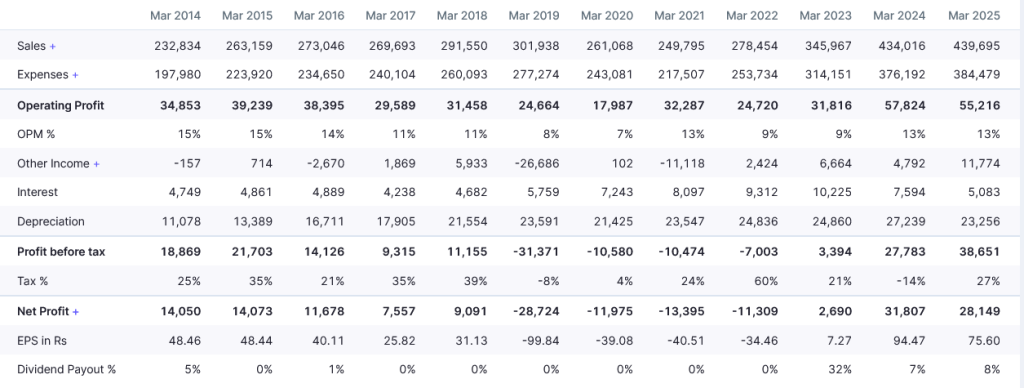
- FY 2024–25 consolidated profit: ₹31,800+ crore
- Net profit doubled YoY; return to strong profitability after years of restructuring.
- Debt reduction: Net automotive debt reduced significantly across both India and JLR arms.
📊 Q1 FY26 (April – June 2025) Highlights:
- Revenue: ₹1.27 lakh crore
- PAT: ₹8,200 crore+
- JLR EBIT margin at ~8.5%+
🌍 3. Global Presence via Jaguar Land Rover (JLR)
- JLR contributes 70% of Tata Motors’ revenue.
- Strong recovery in luxury car demand in Europe, China, and the US.
- Focused on EV transition (e.g., Range Rover Electric) and hybrid models.
- Margin expansion and premium pricing power have boosted cash flows.
🏭 4. Strong Domestic CV & PV Business
- Commercial Vehicles (CV): Tata is a market leader in trucks and buses – benefiting from infra boom and E-commerce growth.
- Passenger Vehicles (PV): Third largest car maker in India after Maruti Suzuki and Hyundai and closing the gap fast.
- New platforms (e.g., Acti.ev, Gen3 architecture) help in reducing cost per unit for EVs.
🤝 5. Synergies with Tata Group Ecosystem
Tata Motors benefits from deep integration with:
- Tata Power – for EV charging infrastructure
- Tata Elxsi – for in car AI and autonomous features
- Tata Technologies – for R&D and digital engineering
- Tata Chemicals – for battery materials
This strengthens Tata Motors’ vertical integration and cost control, unlike rivals.
6. Strong Valuation Potential in 2025 – 26
- Company has delivered good profit growth of 37.4% CAGR over last 5 years
- Company has a good return on equity (ROE) track record: 3 Years ROE 29.8%
- Company has reduced debt.
Bottom line
Tata Motors offers a compelling long term case driven by EV leadership in India, a diversified product portfolio, JLR’s premium exposure and strong Tata Group support. However, material risks remain – notably JLR’s volatile guidance, the sizeable Iveco deal and geopolitical/trade uncertainties. If you believe in Tata’s EV roadmap and can tolerate near term volatility and execution risk, it can be a sensible long term holding.